
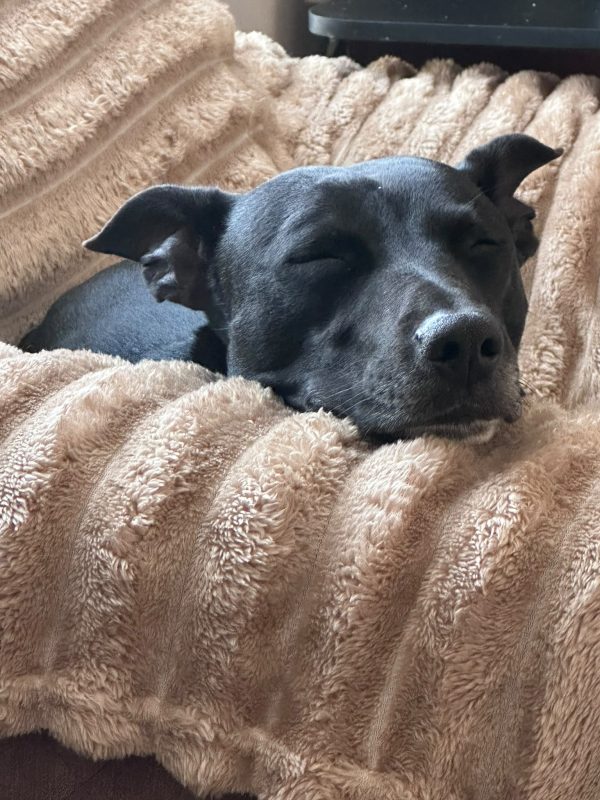
Every dog deserves to have their voice heard
Yesterday I spent some time working with a lovely dog called Nala who is weary of strangers. Like many dogs, she wasn’t being naughty or difficult, she was simply unsure of the unfamiliar person standing in front of her. That person happened to be me.
Normally, I’m incredibly lucky. Most dogs seem to decide fairly quickly that I’m acceptable company, and even dogs who are often wary of men usually begin to relax after a little while. I never take that for granted because trust is something every dog gives in their own time, not something I’m entitled to simply because I’m a dog trainer.
Yesterday was different, and that’s absolutely okay.
Trust isn’t something we can demand
From the moment we met, Nala was telling me exactly how she felt. She kept a little distance, watched me carefully and wasn’t ready to interact. My job wasn’t to convince her that I was friendly or to win her over as quickly as possible. My job was to make sure she knew she didn’t have to.
That meant giving her space, avoiding unnecessary pressure and allowing her to make her own choices. There was no need for me to step into her space, crouch down or offer food in the hope she might eventually accept me. She had already given me her answer for now, and it deserved to be respected.
Dogs are communicating all the time
One of the things I love most about working with dogs is that they are constantly communicating. The challenge is that they don’t use words. Instead, they use their body language, and it’s often far more subtle than many people realise.
A dog who turns their head away, takes a small step backwards, chooses to stand behind their guardian or simply keeps a little more distance isn’t being awkward or stubborn. They’re sharing valuable information about how they’re feeling in that moment. They’re saying, “I’m not quite ready yet.”
When we learn to notice these small signals instead of waiting for the bigger ones, we can respond with understanding rather than unintentionally pushing a dog beyond what they’re comfortable with.
Consent matters to dogs too
As our session continued, something lovely happened. Nala began to relax. She chose to come a little closer, her body softened and her curiosity started to replace her concern. Watching that happen is always a privilege because it’s a reminder that trust grows best when it’s allowed to develop naturally.
What didn’t happen was just as important.
Nala never asked me to stroke her. She never leaned into me, sought physical contact or invited me into her personal space. So I didn’t touch her or invade her personal space as although Nala may have softened around me she was not ready to give me consent, so I did not break the trust we had started to build.
I didn’t take it personally, and I certainly didn’t see it as something I needed to change. She wasn’t rejecting me; she was simply communicating her boundaries, and I respected them.
Sometimes we let our own feelings get in the way
I think this is something many of us are guilty of without even realising it. We naturally want dogs to like us. We want to be the person every dog runs over to for a fuss, and when they don’t, it can be tempting to keep trying.
The problem is that our desire to be liked can sometimes become more important than the dog’s need to feel safe.
As trainers, guardians and dog lovers, our role isn’t to control the outcome for our own satisfaction. It’s to give dogs the confidence that they can make choices without feeling pressured. Ironically, when dogs discover they don’t have to interact with us, they’re often much more willing to choose to.
Listening builds better relationships
That hour reminded me why I’ve always believed that connection comes before everything else. Before we think about lead walking, recall or any other training exercise, we need to build trust. We need dogs to know that we are listening to what they’re telling us, even when those messages aren’t the ones we’d hoped to hear.
Real connection isn’t about making every dog like you. Sometimes it’s about becoming the person who respects them enough not to ask for more than they’re ready to give.
A lesson we can all take away
The next time you meet a dog, resist the urge to reach out straight away and please do not offer your hand for them to sniff…they got a whiff of you long before your hand was offered. Spend a moment simply watching. Let the dog gather information about you in their own time and pay attention to what their body language is telling you.
If they choose to come over for a fuss, that’s wonderful. If they don’t, that’s perfectly okay too.
Not every dog wants to make a new friend, and they shouldn’t have to.
Sometimes the kindest thing we can do is simply listen when a dog says, “Not yet.”
So hopefully one day Nala will come over and give me consent for a stroke, however if not that does not mean I will not be her friend, I will be a friend that respects her boundaries as after all, is that not how we would like to be treated as humans!
Dogs don’t need to like everyone. They need to feel safe.
At SkellyWAGS Dog Training, so much of what we do starts with understanding the dog in front of us. Whether you’re raising a puppy, supporting an anxious rescue or simply wanting a stronger relationship with your dog, learning to read body language and respecting your dog’s choices is one of the greatest foundations you can build.
If you’d like to learn more about creating trust, confidence and connection with your dog, have a look around the website or get in touch. We’d love to help. You may even like our last blog SkellyWags Foundations, Connection before training.


For some dogs, a class environment may not always be ideal and can be stressful. Our 1-2-1 dog training sessions Read more

A great way to have fun with your dog and train at the same time. Hoopers is a form of Read more

At SkellyWags we think it is an amazing way to work on teamwork between your dog and you. It is Read more

Here at SkellyWags you may have noticed we put a lot of energy into telling anybody that will listen about Read more