
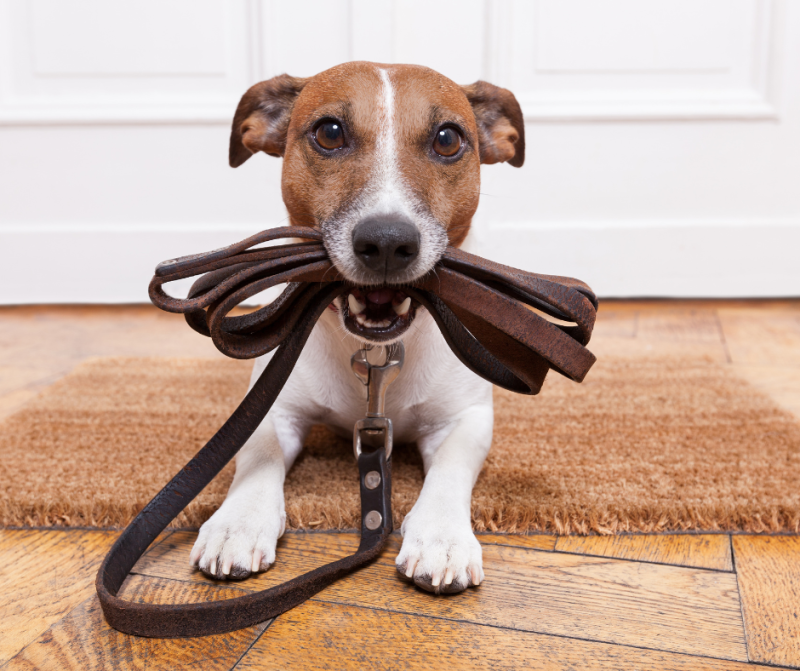
Going for a walk with your dog sounds like it should be one of the easiest and most enjoyable parts of sharing your life with them. Clip on the lead, head out of the door and enjoy a peaceful wander together.
That’s the theory, anyway.
The reality can sometimes involve being dragged towards every interesting smell, apologising to a lamppost and wondering why one small dog appears capable of towing a family car. If your dog pulls on the lead, you certainly aren’t alone. Loose lead walking is one of the most common things people ask me for help with, and it can also be one of the trickiest Life Skills to teach.
The good news is that pulling on the lead doesn’t mean your dog is stubborn, dominant or deliberately trying to make your shoulder six inches longer. It usually means that walking nicely on a lead is a skill they haven’t fully learnt yet, particularly in the environment where you’re asking them to do it.
What is loose lead walking?
Loose lead walking simply means that your dog can walk with you while the lead remains relaxed rather than constantly tight. It doesn’t mean your dog must march beside your left knee, stare up at you for the entire walk or ignore everything around them.
A walk should still allow your dog to sniff, explore and gather information about the world. Sniffing is an important and enriching part of being a dog, not an inconvenient delay between leaving home and getting back for a cup of tea.
Good loose lead walking is about communication and connection. Your dog learns how to move with you, respond when you change direction and understand that pulling isn’t the quickest way to reach something interesting. You also learn to notice what your dog is communicating and adjust the walk when the environment becomes too difficult.
Why do dogs pull on the lead?
Dogs pull for all sorts of reasons, but the simplest explanation is that they usually want to reach something. It might be another dog, a person, a patch of grass, an exciting smell or simply the park at the end of the road.
Dogs naturally walk faster than we do, and they don’t arrive in our homes understanding how a lead works. From their point of view, they move forwards, reach the thing they want and pulling has worked. The more often that happens, the stronger the habit can become.
Some dogs pull because they’re excited, while others may be worried and trying to move away from something. Young dogs can find the outside world incredibly stimulating, and adolescent dogs may suddenly appear to forget everything they previously learnt. This doesn’t mean their training has disappeared. Their brains are busy processing a great deal, and sometimes the environment is simply winning the competition for their attention.
Before trying to change the pulling, it helps to ask why it’s happening. A dog pulling enthusiastically towards the park may need a different approach from a nervous dog trying to create distance from traffic.
Why is loose lead walking so difficult?
Loose lead walking asks a lot from our dogs. We’re expecting them to move at our pace, resist interesting smells, cope with distractions and stay connected with us, often in a busy environment.
Many people begin training on the pavement outside their house, where cars, people, dogs and scents are all competing for their dog’s attention. That can be rather like learning to drive for the first time by joining the M25 during rush hour. Starting somewhere quieter gives both you and your dog a much better chance of success.
Consistency can also be difficult. If pulling sometimes gets the dog to the park, another dog or an exciting smell, it’s worth trying again. Dogs repeat behaviours that work, even when those behaviours make walks rather less enjoyable for the person holding the other end of the lead.
Helpful tips for teaching loose lead walking
Start somewhere quiet
Begin in your house, garden, driveway or another calm space. Practise taking just a few steps together and reward your dog while the lead is relaxed.
Once your dog understands the game, gradually introduce more distracting environments. Training a skill first and then helping your dog use it in different places is much fairer than expecting them to master everything in the busiest location available.
Reward the behaviour you want
Notice the moments when the lead is loose and reward them. This might be with food, praise, movement or permission to investigate an interesting smell.
Don’t wait for a perfect stretch of walking before rewarding your dog. At the beginning, one or two steps on a loose lead may be a genuine success. Rewarding those small moments gives your dog clear information about what works.
Try delivering the reward close to your leg rather than holding it out in front of your dog. This can help create value in being near you without needing to force your dog into position.
Make yourself worth noticing
Your dog doesn’t need to stare at you throughout the walk, but regularly checking in with you is useful. Reward your dog when they voluntarily look back, move towards you or respond to a change in direction.
You can also make training more enjoyable by varying your pace, changing direction and using simple games. If every walk consists of repeatedly saying “heel” while moving in a perfectly straight line, you may both begin to lose the will to live.
Use sniffing as a reward
Food is useful, but it isn’t the only reward available. If your dog wants to investigate a particular smell, wait for a moment of connection or a loose lead and then move towards it together.
This teaches your dog that staying connected with you doesn’t stop them enjoying the environment. In fact, it can be the very thing that gives them access to it.
Avoid pulling your dog back
Constantly pulling or jerking the lead can create frustration, discomfort and confusion. It doesn’t clearly teach your dog what you would like them to do instead.
If the lead becomes tight, you can pause, encourage your dog back towards you or calmly change direction. As soon as the lead relaxes, continue moving and reward your dog. The aim is to make a loose lead useful and rewarding, not to turn every walk into a battle of strength.
Keep training sessions short
You don’t need to practise loose lead walking for the entire walk. That can be difficult for your dog and exhausting for you.
Try a few short periods of focused training, followed by opportunities to sniff and explore. Five successful minutes can teach far more than half an hour of frustration.
It can also help to separate training walks from exercise. If your dog has plenty of energy, consider meeting some of their needs through scentwork, enrichment, play or time in a secure field. Learning becomes much harder when a dog is already bursting with excitement.
Choose suitable equipment
Comfortable, well-fitting equipment matters. A harness should allow your dog’s shoulders to move freely and shouldn’t rub or restrict them. A lead long enough to provide some freedom can also make loose lead walking easier than asking a dog to remain within a very small space.
Equipment can help with comfort and management, but it doesn’t teach the skill by itself. The real learning comes from helping your dog understand what you would like them to do and making that behaviour worthwhile.
What if my dog walks nicely at home but pulls outside?
This is completely normal. Dogs don’t automatically understand that a skill learnt in the garden also applies on the pavement, in the park or somewhere full of exciting smells.
Every change of environment adds another layer of difficulty. If your dog struggles, try increasing your distance from distractions, choosing a quieter location or briefly returning to an easier stage of training.
That isn’t going backwards. It’s simply training the dog in front of you and giving them the support they need in that moment.
How long does loose lead walking take to teach?
There isn’t one answer because every dog is different. Age, previous experience, confidence, excitement levels and the environments you walk in will all affect progress.
Some dogs make noticeable changes quite quickly, while others need more time and carefully managed practice. The aim isn’t a flawless walk by next Tuesday. It’s steady progress, clearer communication and walks that gradually become more comfortable for both of you.
You may still have difficult days. A surprise squirrel can undo some impressive lead walking in approximately half a second. That doesn’t mean the training has failed; it means your dog is a living, breathing sentient being rather than a furry sat-nav operating in pedestrian mode.
Loose lead walking is a Life Skill
Loose lead walking isn’t about controlling every step your dog takes. It’s about helping them learn how to move through the world with you safely and comfortably while still having the freedom to be a dog.
At SkellyWAGS, our positive reinforcement Life Skills training helps dogs and their guardians develop practical skills for everyday life. We look at loose lead walking, connection, focus and communication without using force, fear or intimidation.
If walks have become more of a workout than a wander, take a look at our Life Skills dog training classes in Old Romney, Kent, or contact us to discuss some individual help. We’ll work with the dog in front of us, find out why they’re struggling and build the skill together one relaxed step at a time.

For some dogs, a class environment may not always be ideal and can be stressful. Our 1-2-1 dog training sessions Read more

A great way to have fun with your dog and train at the same time. Hoopers is a form of Read more

At SkellyWags we think it is an amazing way to work on teamwork between your dog and you. It is Read more

Exciting News! So the dust has settled from our Save SantaPaws escape style events for dogs and the feedback was Read more